The Voter ID Trap: How Britain Quietly Disenfranchised Its Poorest Citizens and Called It Security

A Solution in Search of a Problem
In May 2023, during local elections across England, approximately 14,000 people were turned away from polling stations because they could not produce an accepted form of photo identification. According to the Electoral Commission's own post-election report, around 4,000 of those individuals did not return to vote. At the 2024 general election — one of the most consequential in a generation — the Commission estimated that roughly 400,000 people did not vote because they lacked the required ID, or believed they did. These are not abstractions. These are citizens, legally entitled to participate in their own democracy, excluded by a bureaucratic requirement introduced under the Elections Act 2022 and championed by a Conservative government that claimed it was protecting the integrity of the ballot.
Let us be precise about what that integrity case actually amounted to. In the 2019 general election, there were just 34 allegations of in-person voter fraud across the entire United Kingdom. Thirty-four. In a nation of 45 million registered voters. Of those allegations, a single conviction resulted. One. The government's own data, compiled over years of electoral monitoring, showed that impersonation at the polling station — the specific fraud that photo ID is designed to prevent — was so vanishingly rare as to be statistically negligible. When the Electoral Commission itself, in its 2020 report, concluded that there was no evidence of systematic fraud of this type, the government pressed ahead regardless. The policy was not driven by evidence. It was driven by something else entirely.
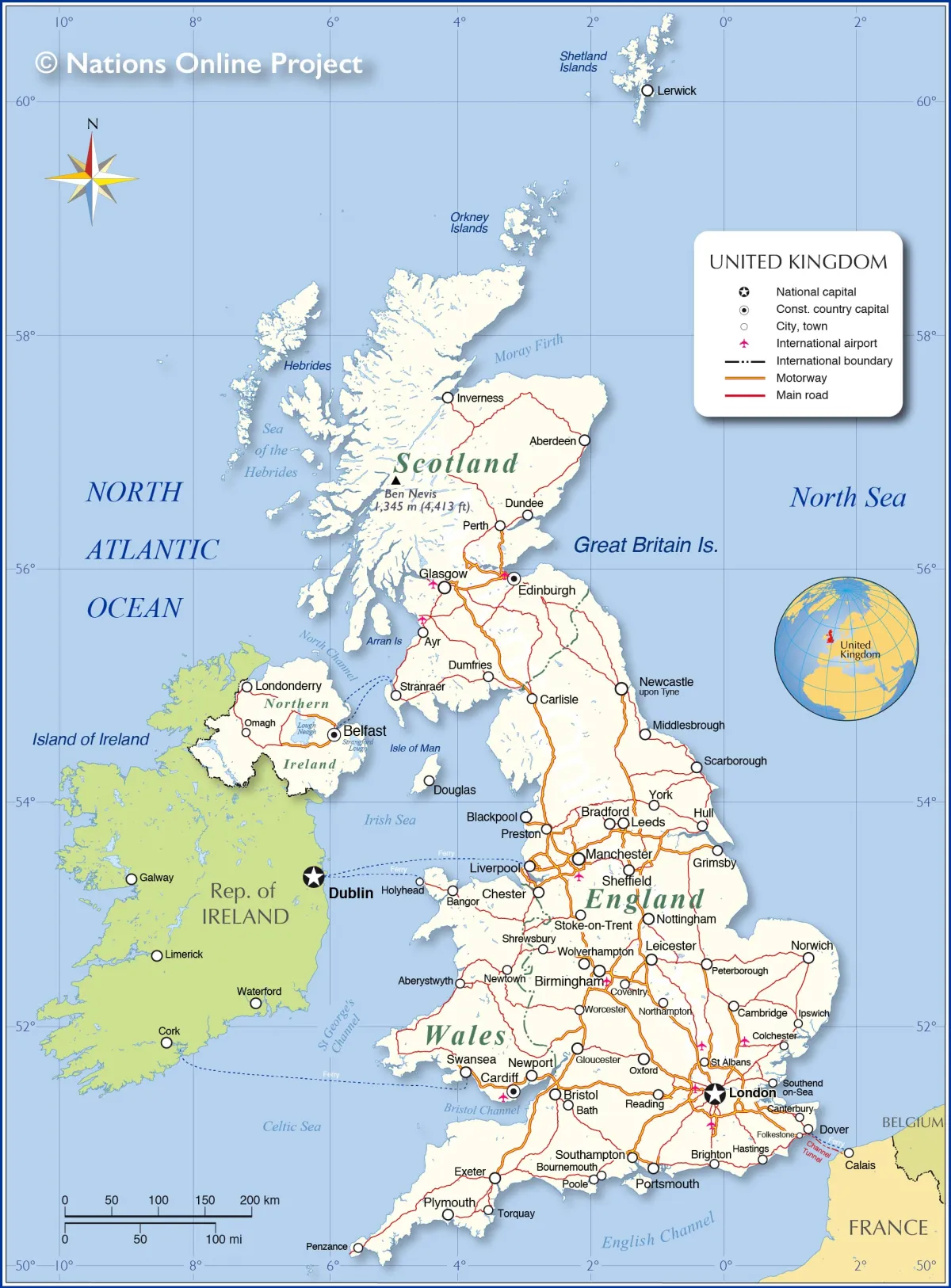 Photo: United Kingdom, via www.nationsonline.org
Who Gets Left Behind
The demographics of disenfranchisement are not random, and they are not accidental. Research by the Electoral Reform Society and the Runnymede Trust has consistently shown that the voters least likely to hold accepted photo identification are disproportionately elderly people on low incomes, disabled people, those in rental accommodation who move frequently, young people, and members of Black, Asian, and minority ethnic communities. A 2023 survey by the Cabinet Office's own evaluation found that 2 per cent of the electorate — over one million people — did not possess any of the accepted forms of ID. That figure was markedly higher among lower-income households and ethnic minority groups.
The government's answer to this disparity was the Voter Authority Certificate — a free document that eligible voters could apply for if they lacked other forms of ID. On paper, a reasonable concession. In practice, a bureaucratic obstacle course. Applicants required a passport-style photograph, a National Insurance number, and the ability to navigate an online or postal application process. For the very populations the scheme was supposed to protect — the digitally excluded, the homeless, the elderly without internet access — these requirements were not minor inconveniences. They were effective barriers. Uptake of the Certificate was strikingly low ahead of both the 2023 local elections and the 2024 general election, suggesting the safety valve was not functioning as intended, if it was ever intended to function at all.
The American Playbook, Imported Quietly
It would be unfair to suggest the Conservative government invented this idea in isolation. Voter ID laws have been a cornerstone of Republican strategy in the United States for decades, where the evidence of their racially and economically discriminatory impact is extensive and well-documented. States that introduced strict photo ID requirements saw measurable declines in turnout among Black and Latino voters in particular. British politicians and commentators who warned, loudly, that the Elections Act was importing American-style voter suppression were dismissed as alarmist. The evidence now suggests they were simply correct.
The strongest version of the pro-ID argument holds that electoral legitimacy depends on public confidence, and that requiring identification — as many European democracies do — is a reasonable safeguard. This is not a frivolous position. France, Germany, and the Netherlands all require some form of ID to vote. But those comparisons collapse under scrutiny. In most comparable European nations, state-issued identity documents are either universal, free, and automatically provided — or the electoral register itself serves as sufficient verification. Britain's system does neither. It introduced a documentary requirement without first ensuring universal access to the required documents. It created a burden and then offered an inadequate remedy for those who could not bear it.
The Political Arithmetic
It would be naive to ignore the political context. The Conservative Party, which introduced this legislation, has historically performed better among older, wealthier, and more settled voters — precisely the demographics most likely to hold valid photo identification. The voters most likely to be excluded — younger renters, low-income workers, people from ethnic minority communities — have tended, in aggregate, to lean away from the Conservatives. The Electoral Commission's data does not prove deliberate partisan engineering. But the distributional consequences of this policy align with partisan interest in ways that are too consistent to dismiss.
Labour, now in government, has been notably quiet about repealing or fundamentally reforming the voter ID requirement. This silence is troubling. A party that claims to represent working people and democratic participation has inherited a law that systematically disadvantages those very people — and has thus far shown little urgency in dismantling it. The Electoral Reform Society and a coalition of civil society organisations have called for a full review. That review, at minimum, is overdue.
What Democracy Actually Requires
Democracy is not merely the formal existence of elections. It is the substantive ability of every eligible citizen to participate in them. When a government introduces a requirement that it knows — because the data is there — will exclude hundreds of thousands of people who are disproportionately poor, disabled, elderly, or from ethnic minority backgrounds, and justifies that exclusion on the basis of fraud so rare it barely registers in official statistics, it has made a choice. That choice has a name. Voter suppression does not require jackboots or burning ballot papers. Sometimes it arrives quietly, dressed in the language of security and integrity, and the people it silences are never loud enough to make the news.
The Voter Authority Certificate was not a solution. It was a fig leaf. What is required is a genuine commitment to universal electoral access — automatic voter registration, freely and automatically issued identification, and a legal framework that treats participation as the default rather than a privilege to be earned through paperwork.
Britain's democracy is not secure because we turned 14,000 people away from polling stations. It is diminished by it — and any government serious about democratic renewal must say so plainly and act accordingly.