Voter ID: The Solution to a Fraud That Barely Exists — and the Suppression That Very Much Does

A Law Built on Sand
In May 2023, for the first time in British electoral history, voters at local council elections were required to produce approved photographic identification before casting their ballot. The policy, enshrined in the Elections Act 2022 and championed by successive Conservative governments, was presented as a necessary modernisation — a defence against the spectre of impersonation fraud that, ministers insisted, was corroding public confidence in democracy. It was, in the words of its architects, simply about making elections secure.
There was one significant problem. The fraud it was designed to prevent barely existed.
According to the Electoral Commission's own figures, there were just four convictions for in-person voter impersonation fraud across the entire United Kingdom in the decade preceding the legislation. Four. In a country that conducts tens of millions of votes across thousands of polling stations. The statistical probability of an individual encounter with in-person electoral fraud was, by any honest reckoning, vanishingly small — lower, in fact, than the probability of being struck by lightning while simultaneously winning the National Lottery.
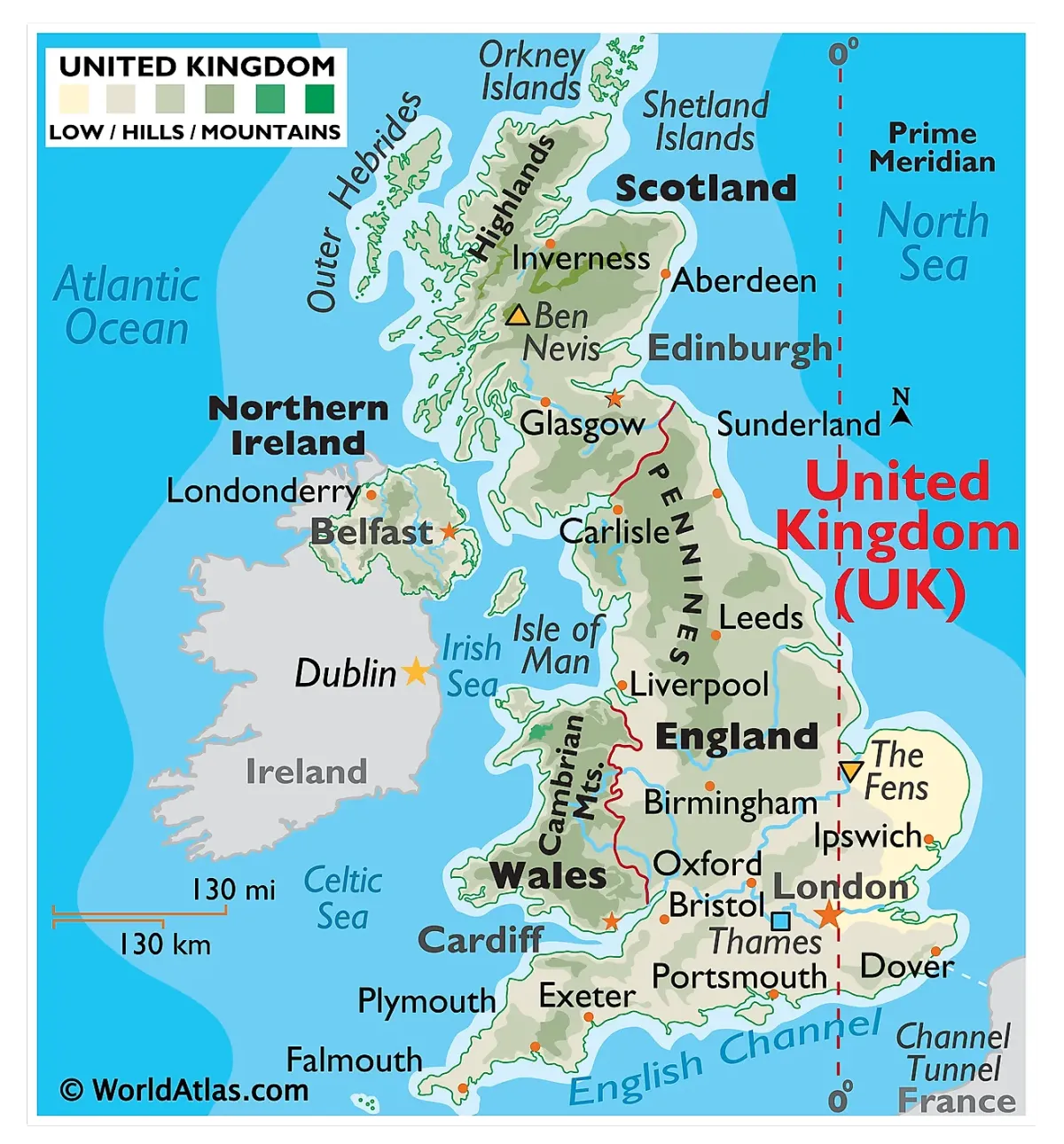 Photo: United Kingdom, via www.worldatlas.com
What the Electoral Commission Actually Found
The Electoral Commission's evaluation of the May 2023 local elections — the first real-world test of the new regime — made for uncomfortable reading for the policy's defenders. An estimated 14,000 people were turned away from polling stations for failing to produce the required identification. Of those, approximately 4,000 did not return to vote. In an electoral system where many constituency contests are decided by margins in the hundreds, the implications are stark.
The Commission also found that the groups most likely to lack qualifying identification were disproportionately those already facing structural disadvantage: younger voters, people from ethnic minority backgrounds, those in lower-income households, and disabled people. These are not random demographic quirks. They map with uncomfortable precision onto the groups least likely to support the Conservative Party.
The 2024 general election compounded the picture. Although Labour's landslide victory meant the suppressive effect did not determine the national outcome, constituency-level analysis suggested that in tighter races, the ID requirement created measurable friction for specific voter populations. The policy's structural bias did not disappear simply because the Conservatives lost badly enough to absorb it.
The Myth of the Level Playing Field
Proponents of Voter ID will argue, not entirely without force, that the principle of verified identity is standard practice in many democracies. France requires identification. Germany does. Why should Britain be different? It is the strongest version of the argument and it deserves a direct response.
The answer lies not in the principle but in the implementation — and, critically, in the context. Countries with robust Voter ID systems have almost universally built them alongside universal provision of free, accessible state identification. In the United Kingdom, the government introduced a Voter Authority Certificate — a free document specifically for voting — but the rollout was poorly publicised, administratively complex, and reached only a fraction of those without qualifying ID. The safety net had holes wide enough to lose thousands of voters through.
More fundamentally, the international comparisons ignore the specific British context: a country with no tradition of national identity cards, a fragmented approach to official documentation, and a polling system that had functioned without photographic ID for over a century. The burden of proof for disrupting that system should have been substantial. It was not met.
Who Pays the Price
The human cost of this policy is not abstract. It is a 19-year-old student without a driving licence, unfamiliar with the new rules, turned away from a polling station and too embarrassed or discouraged to navigate the bureaucracy of a Voter Authority Certificate. It is an elderly care home resident whose expired passport no longer qualifies and whose family hasn't thought to renew it. It is a low-income worker who has never needed a passport and sees no reason to obtain one — until the state decides their vote is now conditional on doing so.
Research by the Joseph Rowntree Foundation and the Runnymede Trust, published in the run-up to implementation, consistently found that possession of qualifying ID correlated strongly with income and ethnicity. Roughly 2 million adults in the UK were estimated to lack the required documentation. The government's own impact assessments acknowledged the disproportionate effect on minority communities — and proceeded anyway.
A Deliberate Architecture of Exclusion
It would be uncharitable to ascribe pure malice to every Conservative MP who voted for the Elections Act. Some, no doubt, genuinely believed they were protecting democratic integrity. But the policy's designers were not operating in ignorance. The demographic data was available. The fraud statistics were available. The international evidence on ID suppression effects was available. The decision to proceed regardless — with a scheme that was under-resourced, under-publicised, and structurally skewed against the already marginalised — cannot be separated from its predictable consequences.
The Conservative Party had spent a decade watching its electoral coalition age and shrink. It had watched younger, more diverse, more urban electorates trend decisively away from it. The Elections Act did not emerge from a vacuum. It emerged from a party that understood, at some level, that the composition of the electorate was becoming structurally unfavourable — and that engineering friction into the voting process for specific demographics was a rational, if deeply anti-democratic, response.
Labour has pledged to review the Voter ID requirement. That review cannot come soon enough, and it must go further than tinkering at the margins. The Elections Act should be repealed in full, the Voter Authority Certificate scrapped as the inadequate sticking plaster it always was, and any future conversation about electoral integrity should begin — as it must — with the evidence, not the political convenience.
The Voter ID law was never about protecting democracy — it was about rationing it, and the people whose votes were made harder to cast were not chosen at random.