Pull and Pay: How NHS Dentistry Was Quietly Dismantled and Replaced With a Market
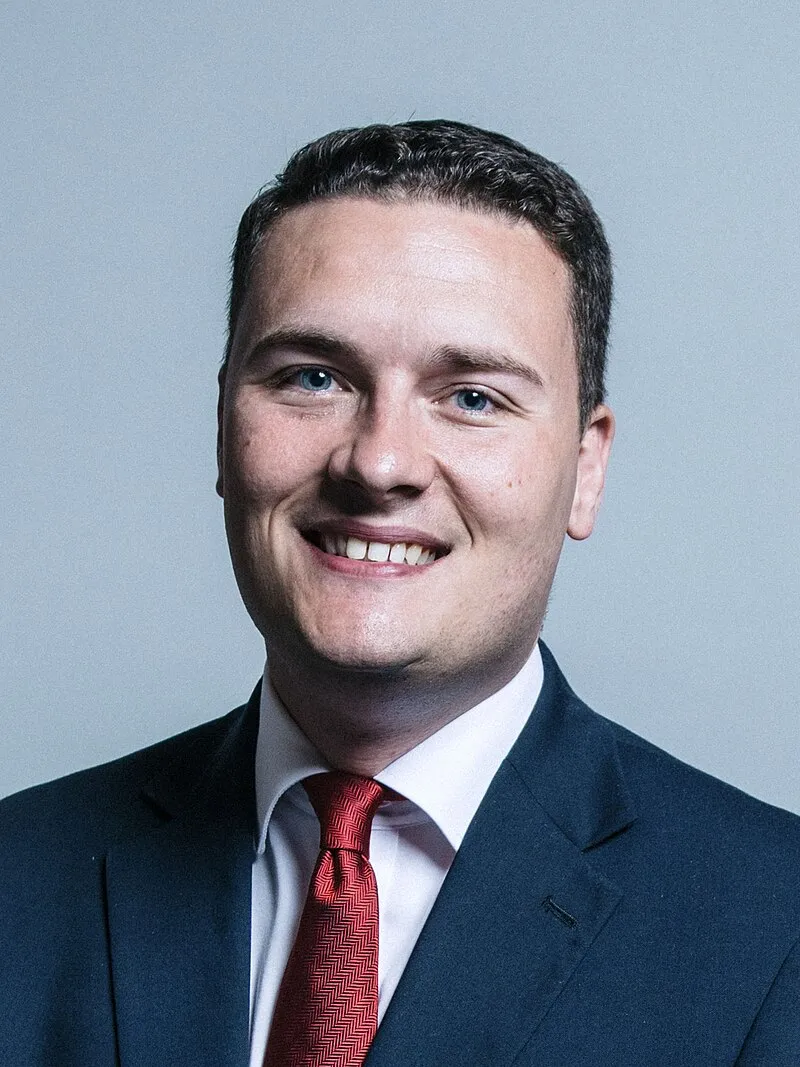
Photo of Wes Streeting, via Wikimedia Commons
The Appointment That No Longer Exists
In the summer of 2024, NHS England confirmed what millions of patients already knew from bitter experience: more than half of dental practices in England were not accepting new NHS adult patients. In some regions — particularly rural areas, coastal towns, and post-industrial communities across the North and Midlands — the figure was closer to three-quarters. The waiting room has not merely become overcrowded. In much of the country, it has simply ceased to exist.
This is not an accident. It is not an oversight. It is the predictable and documented consequence of a contract system that was broken by design, compounded by years of underfunding, and left to fester by successive governments that calculated, correctly, that the political cost of doing nothing was lower than the cost of doing something.
The 2006 NHS dental contract — introduced under Tony Blair and never meaningfully reformed since — replaced item-of-service payments with a unit-of-dental-activity (UDA) system that critics warned from the outset was structurally unsound. Under UDAs, a dentist receives the same payment whether they perform a single filling or a full course of complex treatment. The perverse incentive is obvious: simpler cases become more financially attractive, complex patients become a burden, and NHS lists shrink as practices quietly redirect their capacity towards private work.
The Numbers Behind the Neglect
The British Dental Association has been raising the alarm for years, and the data it presents is damning. NHS dental activity in England fell by around 40 per cent during the pandemic and has never fully recovered. By 2023, NHS dentists were delivering roughly 36 million UDAs annually — compared to a pre-pandemic figure closer to 45 million. The shortfall represents tens of millions of treatments simply not happening.
The human consequences are measurable and grim. Hospital admissions for tooth extractions among children remain among the most common reasons for under-10s to undergo general anaesthetic in England — a statistic that has barely shifted in a decade, despite repeated government pledges to prioritise prevention. In 2022–23, over 35,000 children were admitted to hospital for dental extractions, according to NHS Digital figures. These are not complex cases requiring specialist intervention. They are the entirely foreseeable result of children who never saw a dentist until their teeth were beyond saving.
Among adults, the picture is equally stark. A 2023 survey by Healthwatch England found that around a third of adults had been unable to access NHS dental care when they needed it. Of those, a significant proportion had either paid privately — often at costs running into hundreds or even thousands of pounds — or had gone without treatment entirely. A small but troubling number had resorted to managing dental pain with over-the-counter painkillers, or, in the most extreme cases documented by campaigners, to extracting their own teeth.
A Two-Tier System in Plain Sight
The market that has grown to fill the NHS void is not a solution. It is a stratification. Private dental care in Britain has expanded rapidly over the past decade, and the industry has been happy to absorb patients who can afford it. A routine check-up at a private practice now typically costs between £50 and £80. A crown can run to £800. Orthodontic treatment for a child that would once have been available on the NHS routinely costs £3,000 to £5,000 privately.
For households with disposable income, this is an inconvenience. For the 14 million people in the UK living in poverty, it is a closed door. Dental health, once a universal entitlement under Bevan's NHS settlement, has become a luxury good — something you access if your income permits, and forgo if it does not.
The defenders of the status quo will argue that the NHS was never designed to fund cosmetic dentistry, and that private provision simply reflects consumer choice. This is the strongest version of the opposing case, and it deserves a direct response. The treatments we are discussing — fillings, extractions, root canals, basic preventive care — are not cosmetic. They are medically necessary. Untreated dental disease is linked to cardiovascular disease, diabetes complications, respiratory infections, and adverse pregnancy outcomes. Oral health is not a separate category from general health. It is part of the same body, and a health service that abandons it is not universal in any meaningful sense.
Who Bears the Cost
The communities hardest hit by the dental access crisis are, predictably, those already carrying the heaviest burden of health inequality. Deprived coastal towns, former mining communities, rural areas with thin provider markets — these are the places where NHS dental deserts are most entrenched. They are also, not coincidentally, places where Conservative governments held seats for decades and where Labour is now attempting to rebuild.
Older patients on fixed incomes, disabled people who cannot easily travel to distant practices, and families with young children are disproportionately affected. Asylum seekers and refugees, many of whom are entitled to free NHS dental treatment but struggle to register with a practice, face near-total exclusion. The inequality is compounding: those with the least access to preventive care develop the most complex conditions, which are then the hardest to treat and the most likely to be declined by overstretched NHS practices.
What a Genuine Fix Would Require
The Labour government has announced a 'Dental Recovery Plan', which includes the creation of additional supervised practice placements for overseas-trained dentists and a new patient premium to incentivise practices to take on patients who have not been seen for two or more years. These are welcome, if modest, interventions. They do not address the structural failure of the UDA contract, and they do not come close to the scale of investment required to restore genuinely universal access.
What is actually needed is a root-and-branch renegotiation of the dental contract, a significant uplift in NHS dental funding — the BDA estimates the service is underfunded by hundreds of millions of pounds annually — and a genuine commitment to treating oral health as a public health priority rather than an optional extra. Prevention must be placed at the centre: fluoridation, school-based dental programmes, and community outreach in underserved areas are all proven tools that successive governments have declined to deploy at scale.
The political will has never materialised because dental health does not generate the same headlines as A&E waiting times or cancer backlogs. Toothache is unglamorous. Suffering quietly in a waiting room that no longer exists generates no dramatic images. But the slow, grinding degradation of access to basic dental care is one of the clearest illustrations of what happens when a public service is starved of resources and left to the market: the poorest pay the highest price, in pain, in preventable illness, and in the quiet indignity of a health system that has decided their teeth are not worth the investment.
A civilised society does not let its poorest citizens rot in pain for want of a dentist — and a government that calls itself progressive cannot continue to treat this crisis as anything less than the public health emergency it plainly is.