The Pension Tax Relief Racket: How Britain Subsidises the Wealthy in Retirement While Ordinary Workers Go Without

A Retirement System That Works Brilliantly — If You Are Already Rich
Every autumn, the state pension dominates the political headlines. The triple lock, its cost, its sustainability, whether pensioners are being pampered or protected — these questions consume enormous political energy and column inches. Meanwhile, a far larger and far more consequential scandal sits almost entirely undiscussed: the way Britain's pension tax relief system transfers tens of billions of pounds each year from public finances to those who need the least help saving for retirement.
In the 2023-24 financial year, pension tax relief cost the Treasury approximately £48.7 billion, according to HMRC figures. That is more than the entire annual budget for most government departments. And the distribution of that relief is grotesquely skewed. Analysis by the Pensions Policy Institute and the Resolution Foundation has consistently shown that higher-rate and additional-rate taxpayers — those earning above £50,270 and £125,140 respectively — receive relief at 40% and 45% on their contributions, while basic-rate taxpayers receive just 20%. The result is that those who contribute the most to their pensions in absolute terms, because they earn the most, receive the most generous subsidy from the state on every pound they save.
How Pension Tax Relief Actually Works
The mechanics are worth spelling out, because the complexity is part of what keeps this scandal off the front pages. When you contribute to a pension, the government tops up your contribution by refunding the income tax you would have paid on that money. For a basic-rate taxpayer, a £100 contribution costs £80 out of pocket — the government adds £20. For a higher-rate taxpayer, the same £100 contribution costs just £60, with the government contributing £40. For an additional-rate payer, it costs £55, with the state providing £45.
In other words, the more you earn, the more the state subsidises your retirement saving. The Resolution Foundation has estimated that the top 1% of earners receive more in pension tax relief than the bottom 50% combined. This is not a quirk or an oversight. It is the logical outcome of a system that links the generosity of the public subsidy directly to your marginal tax rate — and therefore to your income.
There is also an employer dimension. Employer pension contributions attract National Insurance relief, which again disproportionately benefits larger employers making contributions on behalf of higher-earning staff. The total cost of this employer relief runs to billions of pounds annually — a further subsidy flowing overwhelmingly toward the top of the income distribution.
The Reform That Never Comes
Proposals for a flat-rate pension tax relief — replacing the current marginal-rate system with a single rate, typically proposed at around 25% or 30% — have been circulating in policy circles for well over a decade. The logic is straightforward: a flat rate would be more generous to basic-rate taxpayers than the current 20%, less generous to higher earners, and would save the Treasury several billion pounds annually that could be redirected toward the state pension, social care, or public services.
Every recent government has considered it. Every recent government has backed away. The 2016 Pensions Green Paper under George Osborne came closest to action, but the proposal was quietly shelved. The reason, consistently, is political: higher-rate taxpayers are disproportionately represented among party donors, senior party members, and the commentariat that shapes public debate. They are also more likely to vote, more likely to be engaged in the political process, and more likely to make their displeasure known through channels that matter to ministers.
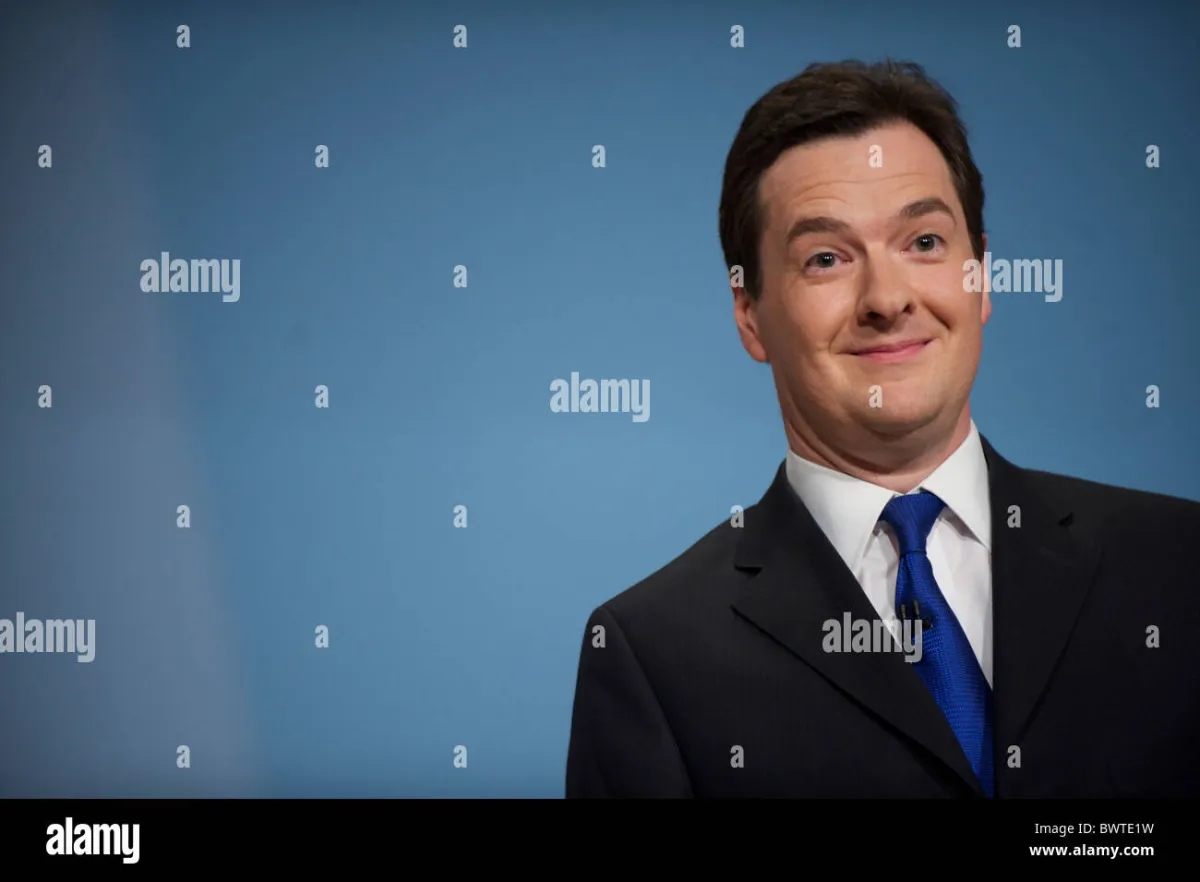 Photo: George Osborne, via c8.alamy.com
This is not conspiracy — it is the mundane mechanics of how concentrated economic interests protect themselves in a democracy with weak campaign finance rules and a revolving door between government and the financial services sector.
The Strongest Case for the Status Quo
Defenders of the current system make two arguments that deserve genuine engagement. The first is that pension saving is inherently long-term and that higher earners, who pay more tax across their lifetimes, should receive proportionately more relief because they are deferring proportionately more taxation. The second is that reducing relief for higher earners risks reducing the total amount saved in private pensions, which would ultimately increase pressure on the state pension and public finances.
Both arguments have some merit in isolation. But neither survives contact with the distributional reality. The first amounts to saying that the wealthy deserve more public subsidy because they pay more tax — a circular justification for a regressive system. The second assumes that higher earners would significantly reduce their pension contributions if relief were cut, when the evidence from comparable countries suggests the behavioural response is modest. People saving for retirement at high income levels do not typically abandon that saving because the subsidy is slightly less generous.
Who Is Left Behind
The human cost of this system's design is most visible among two groups. The first is low-income workers — particularly part-time workers, many of them women — who earn below the auto-enrolment threshold of £10,000 and are excluded from workplace pensions entirely, receiving no tax relief at all. An estimated 1.5 million workers, predominantly female, fall into this category, according to the People's Pension.
The second group is the self-employed, who are excluded from auto-enrolment, must navigate pension saving without employer contributions, and receive relief at their marginal rate — which, for the many self-employed people earning modest incomes, is 20% or nothing. The gig economy has created a vast class of workers with no employer pension contribution, no automatic enrolment, and no one advocating for their retirement security in the corridors of power.
What Fairness Would Look Like
A genuinely progressive pension system would start from the principle that the public subsidy for retirement saving should be equal — the same rate for every worker, regardless of income. It would extend auto-enrolment to all workers, including part-timers earning below the current threshold. It would require transparency about the distributional impact of tax relief so that the cost to public finances is visible in the same political debate as the state pension.
None of this is radical. Several comparable European countries operate flat-rate or capped relief systems. The barrier is not economic feasibility — it is political will, and political will is shaped by political power. In Britain, the people who profit most from the current system are the same people who fund the parties, populate the think tanks, and edit the newspapers. That is why pension tax relief reform is perpetually described as 'complex' and perpetually deferred.
Britain has socialised the risk of retirement — through the state pension, pension credit, and housing benefit for older people — while privatising the rewards of the savings system for those who need them least. Until that fundamental injustice is named and challenged directly, the bonfire of public money will keep burning in the direction of those already warm.