Menstruation Is Not a Charity Case: The Deliberate Political Choice Behind England's Period Poverty Failure

Menstruation Is Not a Charity Case: The Deliberate Political Choice Behind England's Period Poverty Failure
In November 2020, Scotland made history. The Period Products (Free Provision) (Scotland) Act received Royal Assent, placing a statutory duty on local authorities to ensure that anyone who needs period products can access them free of charge — in schools, in community centres, in pharmacies, in public buildings. It was not a pilot scheme. It was not a grant programme subject to annual renewal. It was a law. A right. A recognition that access to the products required to manage a normal, healthy biological function is a matter of public health, not personal financial management.
In England in 2025, the situation remains what it has been for years: a fragmented, underfunded, charity-dependent mess that treats menstruation as a misfortune to be managed by voluntary generosity rather than a basic need to be guaranteed by the state.
What Period Poverty Actually Means
The language of 'period poverty' can, if one is not careful, allow the scale and nature of the problem to be obscured by its own euphemism. To be clear about what it describes: people — predominantly women and girls, but also trans men, non-binary individuals, and others who menstruate — who cannot consistently afford period products are forced to make choices that affect their health, their dignity, and their participation in public life.
They use products for longer than is safe. They improvise with toilet paper, socks, or other materials. They stay home from school or work. They experience anxiety, shame, and the particular indignity of having a private bodily function become a source of public vulnerability. Research by Plan International UK in 2021 found that one in ten girls aged 14 to 21 in the UK had been unable to afford period products. A 2023 survey by Bloody Good Period found that 51 per cent of people they surveyed who had experienced period poverty said it had affected their ability to attend school or work.
These are not marginal figures. They represent a significant and ongoing public health failure.
England's Patchwork: Grants, Goodwill, and Gaps
The Westminster government's response to period poverty has centred on the Department for Education's Period Products Scheme, which provides free products to state-maintained schools and colleges in England. This scheme has done genuine good — it has ensured that period products are available in educational settings for students who need them — but it is limited in scope, dependent on schools actively ordering and distributing products, and does not extend to the wider community settings where adults in poverty experience the same need.
Beyond schools, provision is almost entirely charitable. Food banks — already operating at record demand — routinely include period products in their distributions. Organisations such as Bloody Good Period, Hey Girls, and Freedom4Girls run collection and distribution programmes that depend on public donations and grant funding. These organisations are doing vital work. They should not have to.
The contrast with Scotland is not merely procedural. It is philosophical. Scotland decided that the state has a responsibility to ensure access to period products, and it encoded that decision in legislation. England has decided, repeatedly and by omission, that the responsibility lies with charities, with individual donors, and ultimately with the people who cannot afford the products themselves.
The Gendered Austerity Dimension
It is not possible to understand England's failure to legislate on period poverty without understanding the broader context of gendered austerity. The public spending cuts that began under the Coalition government in 2010 and continued throughout the following decade did not fall equally. Research by the House of Commons Library and organisations including the Women's Budget Group has consistently demonstrated that austerity measures — cuts to benefits, reductions in public sector employment, changes to tax credits, reductions in social care funding — disproportionately affected women, and most acutely affected low-income women.
Period poverty sits within this broader landscape of gendered economic disadvantage. The people most likely to be unable to afford period products are the same people most likely to have been hardest hit by a decade of cuts to the social security safety net: single mothers, women in low-paid and precarious work, women with disabilities, women in temporary or insecure housing. The failure to legislate is not a coincidence of fiscal constraint. It is the continuation of a pattern in which women's specific needs are consistently treated as a lower priority than the general fiscal position.
Disabled People and Those in Temporary Accommodation: The Invisible Dimension
Public discussion of period poverty tends to centre on young people in educational settings — partly because the school-based scheme represents the most visible policy intervention, and partly because the image of a schoolgirl unable to afford period products is the one most likely to generate political sympathy. This framing, while not wrong, is incomplete.
Disabled people who menstruate face compounded barriers: the cost of period products interacts with the broader financial pressures of disability, including higher energy costs, specialist equipment costs, and the well-documented inadequacy of disability benefits following years of real-terms cuts. For people with certain physical disabilities, managing menstruation involves additional products or adaptations that increase cost further.
People in temporary accommodation — in hostels, in bed-and-breakfast placements, in emergency shelter — face particular difficulty accessing both products and the stable environment in which to use them. The charitable networks that serve the general low-income population often do not reach these settings effectively. The state provision that exists does not cover them.
Scotland's Model and Why Westminster Hasn't Followed It
The Scottish legislation was introduced as a member's bill by Labour MSP Monica Lennon, passed with cross-party support, and came into force following a period of stakeholder consultation and implementation planning. It is not an enormously expensive programme — the annual cost to Scottish local authorities has been estimated in the millions, not the hundreds of millions. It is administratively straightforward. It has broad public support.
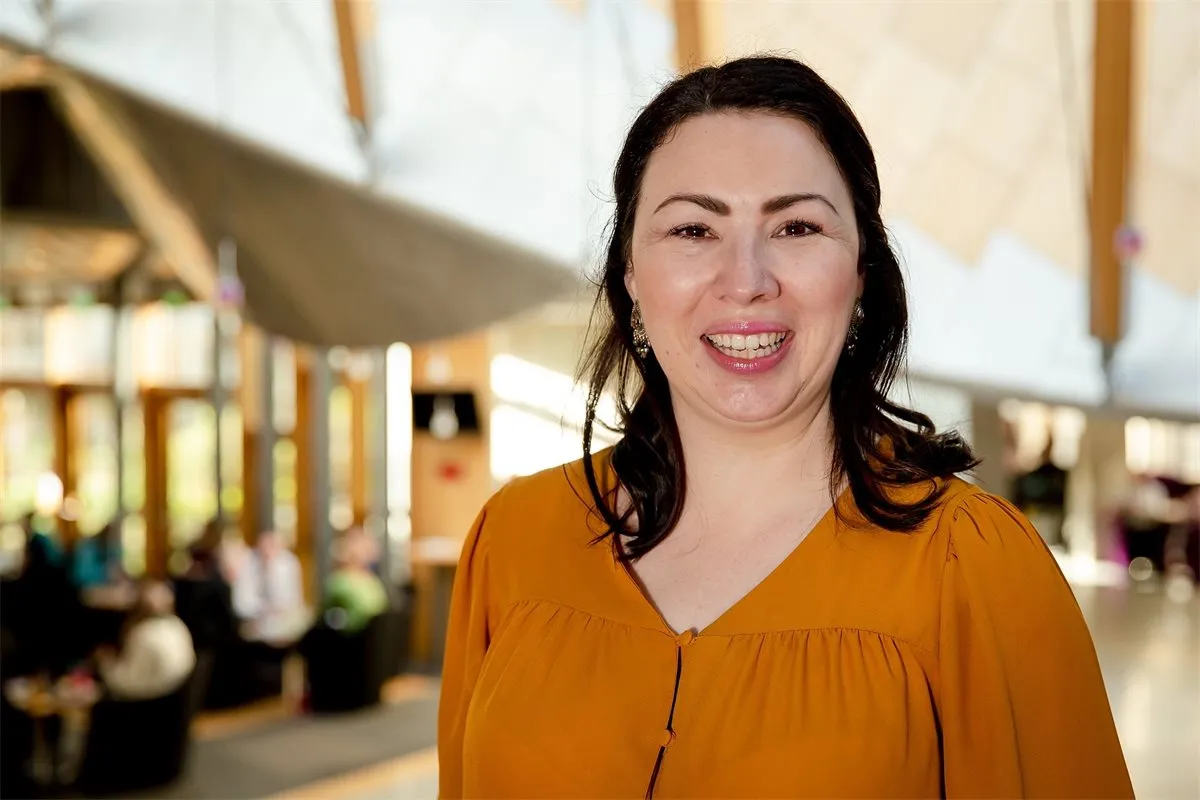 Photo: Monica Lennon, via www.holyrood.com
The question of why England has not followed is therefore primarily political, not financial or logistical. The most candid answer is that successive Westminster governments have not regarded the issue as a sufficient political priority to legislate. The charitable sector has provided a convenient pressure valve — a way of managing the immediate humanitarian problem without the state having to accept formal responsibility for solving it.
Labour's current government has not committed to replicating the Scottish model in England. The expansion of the school-based scheme has been welcomed, but calls from campaigners and some Labour backbenchers for a statutory universal entitlement have not been met with legislative commitment. For a party that came to power promising to govern in the interests of working people, the continued reliance on charity to address a basic public health need is a conspicuous omission.
The Principle at Stake
This is, at its core, a question about what the state believes it owes its citizens. We do not ask people to rely on charitable donation for access to running water, or for the use of public toilets, or for the basic sanitation infrastructure that underpins public health. We recognise these as collective responsibilities because we recognise that their absence creates harm that falls on individuals but reflects on all of us.
Menstruation is not an illness. It is not a misfortune. It is a normal biological function experienced by roughly half the population for a significant portion of their lives. The products required to manage it safely and with dignity are not luxuries. Treating access to them as a matter for charitable goodwill rather than legislative guarantee is a choice — and it is a choice that tells the people most affected exactly where they stand in the state's hierarchy of concern.
Scotland proved that legislating on period poverty is straightforward, affordable, and right — England's continued refusal to follow is not a resource problem, it is a values problem, and it demands a political answer, not another charity appeal.