Still Trapped, Still Burning: How the Post-Grenfell Cladding Crisis Became a Blueprint for Developer Impunity
Seven Years and Counting
On the night of 14 June 2017, 72 people died in Grenfell Tower because the building they lived in had been wrapped in cladding that turned it into a torch. The inquiry that followed — running for years at enormous public expense — documented in forensic detail how that happened: a system of building regulation that had been deliberately weakened, a culture of cost-cutting by developers and contractors, and a local authority that failed the residents who trusted it. The inquiry's final report, published in September 2024, assigned responsibility with unusual directness.
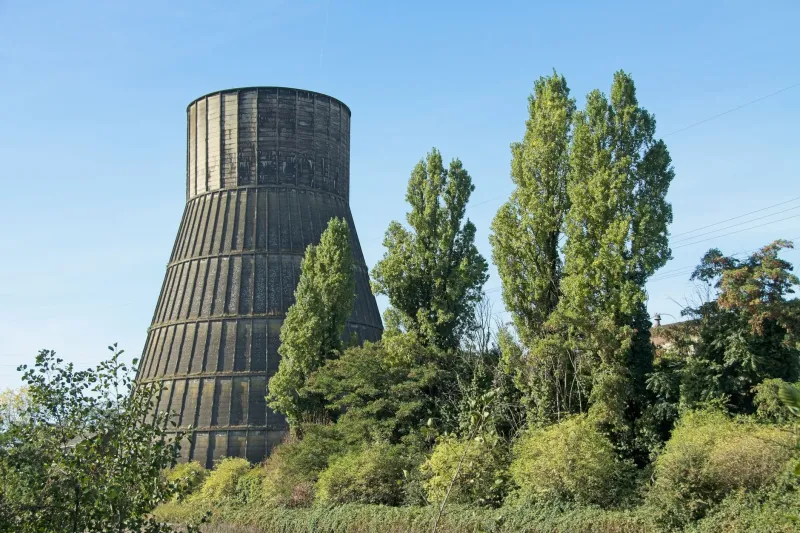
 Photo: Grenfell Tower, via img.freepik.com
And yet, as of 2025, the remediation crisis that Grenfell exposed has not been resolved. Across England, government estimates suggest that hundreds of thousands of homes in medium- and high-rise buildings still require some form of fire safety remediation. The End Our Cladding Scandal campaign, which has tracked the human cost of this failure since 2018, has documented the lives that have been placed on hold: the divorces that could not be finalised because a flat could not be sold, the job opportunities declined because relocation was impossible, the mental health crises triggered by years of living in a home you know to be dangerous and cannot escape.
The Building Safety Act: A Promise With Loopholes Built In
The government's primary legislative response to the crisis was the Building Safety Act 2022, which created new frameworks for assigning remediation liability and established the principle — welcome in itself — that leaseholders should not bear the cost of fixing defects they did not cause. The Act introduced protections preventing certain costs from being passed to leaseholders in buildings above 11 metres, and created a developer remediation contract under which major housebuilders committed to remediate buildings they had developed.
These were genuine steps forward, achieved in significant part through the relentless campaigning of leaseholders who had spent years being told the problem was theirs to solve. But the Act's protections are riddled with gaps that have become apparent in implementation. Buildings below 11 metres are largely excluded from the strongest protections, despite the fact that fires in lower-rise buildings can be equally deadly. Orphan buildings — those where the original developer no longer exists or cannot be identified — fall into a remediation fund that is chronically underfunded and slow to disburse. And the definition of 'relevant defects' covered by the Act has, in practice, been interpreted in ways that leave significant categories of fire safety work outside the scope of leaseholder protection.
Meanwhile, the developer remediation contract, while signed by dozens of major housebuilders, has been the subject of persistent complaints about the pace of progress. The National Audit Office and parliamentary committees have raised concerns about the government's ability to enforce the contract and hold developers to account where remediation is delayed or disputed.
The Lobbying Apparatus Behind the Loopholes
None of the gaps in the Building Safety Act are accidental. The major housebuilders and their trade associations — most prominently the Home Builders Federation — mounted an intensive lobbying operation during the Act's passage through Parliament, arguing that broad liability would threaten the viability of the development sector and reduce housing supply. These arguments found a receptive audience among ministers and officials who had internalised the idea that any constraint on developer profitability risked the housing numbers the government needed to protect.
The result was legislation that offered leaseholders real but incomplete protection, and offered developers a framework within which their exposure was meaningful but manageable. Persimmon, Barratt, Taylor Wimpey, and other major builders have remained profitable throughout the post-Grenfell period. Their shareholders have continued to receive dividends. Their executives have continued to receive bonuses. The leaseholders trapped in their defective buildings have continued to pay interim waking watch costs, inflated insurance premiums, and in many cases remediation bills that the Act's protections do not fully cover.
Who Bears the Cost
The demographics of the cladding crisis are not evenly distributed. The flats most affected are disproportionately concentrated in urban areas, purchased by working- and middle-class buyers — often first-time buyers — who were sold the promise of affordable city-centre homeownership and discovered, too late, that what they had actually purchased was a liability. Many bought with help-to-buy equity loans, meaning the government itself was a financial participant in transactions that placed people into dangerous and unsellable homes.
For these leaseholders, the past seven years have involved a sustained exercise in institutional gaslighting. They were told initially that the problem was limited to ACM cladding — the type used at Grenfell. Then the scope expanded to include other combustible cladding systems, then to internal fire safety defects including missing cavity barriers and defective fire doors. Each expansion of the problem's definition was accompanied by fresh disputes about who was responsible for paying to fix it.
The strongest counter-argument from the development industry is that retrospective liability for historical building defects creates legal and commercial uncertainty that will deter investment and reduce housing supply at precisely the moment the country needs more homes. This argument deserves to be taken seriously as an economic proposition. It does not, however, address the moral question of why the people least responsible for the defects — the leaseholders who bought in good faith — should bear the financial consequences of an industry that built to inadequate standards and lobbied successfully to weaken the regulations that might have prevented it.
The Accountability That Never Came
The Grenfell Inquiry's final report named individuals and organisations responsible for the disaster. It made clear that the cladding manufacturers — including Arconic and Kingspan — had acted in ways that were, in the inquiry chair Sir Martin Moore-Bick's words, dishonest and misleading. It documented the failures of the Royal Borough of Kensington and Chelsea, of the contractor Rydon, of the project management firm Artelia. It recommended criminal prosecutions.
 Photo: Sir Martin Moore-Bick, via i.ytimg.com
 Photo: Royal Borough of Kensington and Chelsea, via img.freepik.com
The Metropolitan Police investigation into Grenfell remains ongoing. No prosecutions have yet been brought. The manufacturers named in the report have largely avoided the financial consequences one might expect to flow from findings of this gravity. The regulatory system that failed has been reformed incrementally but not fundamentally. And the political will to impose the kind of comprehensive, industry-funded remediation programme that would actually clear the backlog — within a defined timeframe, with enforceable deadlines and meaningful penalties for non-compliance — has not materialised from either the current government or its predecessor.
This is what impunity looks like in practice. Not a single dramatic act of evasion, but a slow accumulation of delayed reports, underfunded schemes, qualified protections, and lobbying-shaped legislation that allows those most responsible to remain substantially whole while those least responsible remain trapped.
Seven years on from Grenfell, the question is no longer whether the system failed — it is whether we have the political will to stop letting it happen again.