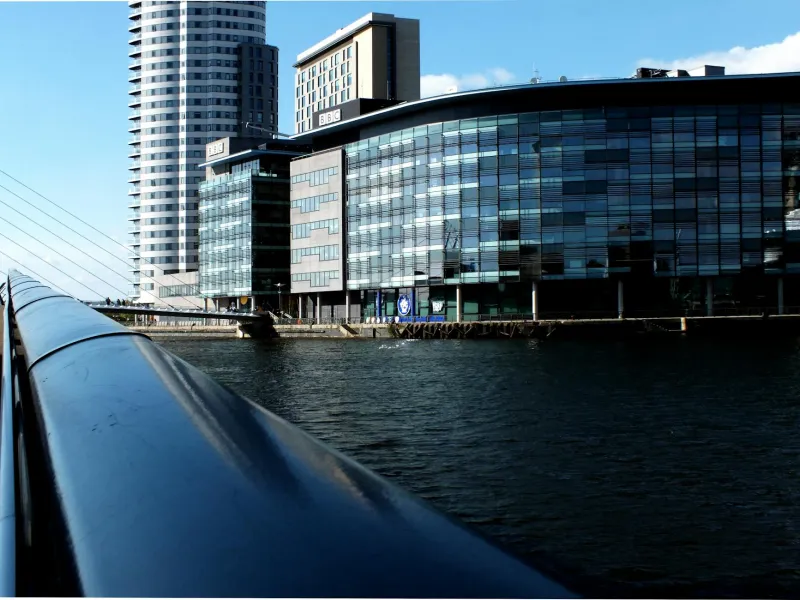
When Culture Secretary Lucy Frazer announced the BBC licence fee would remain frozen until 2027, she framed it as relief for struggling households facing a cost-of-living crisis. The rhetoric was compelling: why should families choose between heating and television? Yet scratch beneath this populist veneer, and a more sinister project emerges—the systematic dismantling of public service broadcasting to clear the field for commercial media monopolies.
The Manufactured Crisis: How Austerity Became Ideology
The BBC's financial predicament didn't emerge organically from changing viewing habits or technological disruption. It was engineered through a decade of licence fee freezes, responsibility transfers, and funding cuts that have reduced the Corporation's real-terms income by 30% since 2010. This isn't fiscal prudence—it's ideological warfare disguised as economic necessity.
Consider the timeline: George Osborne's 2010 spending review forced the BBC to fund BBC World Service, S4C, and rural broadband rollout—previously Treasury responsibilities worth £340 million annually. The 2015 licence fee settlement froze funding for six years while loading the Corporation with free TV licences for over-75s, an additional £745 million burden. Each 'negotiation' followed the same pattern: public service obligations expanded while funding contracted.
This isn't accidental policy drift—it's deliberate institutional strangulation. The same politicians demanding BBC 'efficiency savings' somehow discover unlimited public funds for nuclear weapons, corporate tax breaks, and subsidies to fossil fuel companies. Fiscal conservatism, it seems, applies selectively.
Following the Money: Who Benefits from BBC Decline?
The BBC's critics aren't motivated by concern for household budgets—they're funded by commercial rivals seeking market dominance. The Institute of Economic Affairs, a prominent BBC opponent, receives substantial donations from media companies including News UK, Rupert Murdoch's British operation. The Taxpayers' Alliance, another vocal critic, has historical links to Conservative Party donors with significant media interests.
This isn't coincidence. Commercial broadcasters understand that weakening the BBC creates advertising revenue opportunities worth hundreds of millions. Sky, ITV, and Channel 4 benefit directly when BBC programming budgets shrink, audiences fragment, and public service obligations diminish. The campaign against licence fee funding isn't grassroots pressure—it's corporate lobbying with populist branding.
Murdoch's empire provides the template. Across four decades, News Corporation has systematically undermined public broadcasting in Australia, weakened the CBC in Canada, and captured regulatory frameworks in the United States. Britain represents the final frontier: home to the world's most respected public broadcaster and, not coincidentally, the most sophisticated anti-BBC propaganda campaign.
International Warnings: When Public Broadcasting Dies
Other countries offer cautionary tales about what happens when public service broadcasting loses political protection. Australia's ABC has suffered massive funding cuts since 2013, losing 25% of its budget and 1,000 staff positions. Programming quality has declined, regional coverage has disappeared, and commercial networks have captured audience share previously served by public broadcasting.
Poland provides an even starker example. The ruling Law and Justice party systematically captured public broadcasting between 2015-2023, transforming TVP from independent journalism into government propaganda. Staff were purged, editorial independence evaporated, and democratic accountability crumbled. While Britain's situation hasn't reached Polish extremes, the underlying dynamic—political pressure translating into institutional capture—remains identical.
Canada's CBC faces similar pressures, with Conservative politicians promising to 'defund the CBC' despite polling showing majority public support for public broadcasting. The pattern is consistent: right-wing parties campaign against public media using populist rhetoric while serving commercial media interests.
The Democratic Imperative: Why Public Broadcasting Matters
Public service broadcasting isn't nostalgic luxury—it's democratic infrastructure. The BBC remains Britain's most trusted news source, reaching 90% of adults weekly across television, radio, and online platforms. Its independence from commercial pressures enables coverage of stories that don't serve advertising interests: corporate malfeasance, political corruption, environmental destruction.
Commercial media operates according to profit maximisation, not public interest. Investigative journalism, regional coverage, and minority programming disappear when advertising revenue becomes the primary consideration. The BBC's public funding model, whatever its imperfections, insulates editorial decisions from commercial interference in ways that commercial competitors cannot replicate.
This independence explains why powerful interests want the BBC weakened. When corporations face regulatory scrutiny, politicians confront scandal, or government policies fail, the BBC's investigations carry unique authority precisely because they're not compromised by commercial relationships. Defunding public broadcasting doesn't just change media ownership—it eliminates institutional accountability.
The Licence Fee: Progressive Funding in Disguise
Critics portray the licence fee as regressive taxation hitting the poorest hardest. This analysis ignores how public broadcasting actually functions as wealth redistribution through cultural provision. BBC services—from Radio 4 documentaries to BBC iPlayer drama—would cost hundreds of pounds monthly through commercial subscriptions. The licence fee provides universal access to content that would otherwise be luxury consumption.
Moreover, commercial alternatives impose their own costs through advertising, subscription fees, and data harvesting. Netflix charges £180 annually for premium access; Sky packages exceed £600 yearly; Amazon Prime extracts personal data worth considerable commercial value. The BBC licence fee, at £159 annually, provides better value than any commercial alternative while maintaining editorial independence.
Progressive alternatives exist—funding public broadcasting through general taxation would eliminate affordability concerns while maintaining democratic accountability. Yet Conservative politicians reject this option because it would remove their primary weapon against BBC independence: the threat of licence fee abolition.
Cultural Imperialism: The Murdoch Model Goes Global
The attack on public broadcasting extends beyond British politics into global cultural influence. BBC World Service reaches 320 million people weekly, providing independent journalism in 40 languages to audiences living under authoritarian governments. This represents soft power projection that commercial media cannot replicate—and that authoritarian regimes desperately want eliminated.
Murdoch's media empire, by contrast, serves narrow political and commercial interests rather than public good. Fox News in America, The Sun in Britain, and The Australian all demonstrate how commercial media consolidation enables political manipulation and democratic degradation. Weakening the BBC removes a crucial counterweight to this concentrated media power.
The stakes extend beyond British broadcasting. If the world's most respected public broadcaster succumbs to commercial capture, it signals that democratic media institutions cannot survive in contemporary capitalism. Authoritarian leaders worldwide would celebrate such an outcome—and democratic movements would lose a vital ally.
The Path Forward: Defending Democratic Media
Progressives must recognise the BBC's defence as fundamental to democratic politics. This doesn't require uncritical support—the Corporation needs reform, greater diversity, and stronger accountability mechanisms. But these improvements require adequate funding and political independence, not commercial capture disguised as modernisation.
Alternative funding models deserve serious consideration: hypothecated taxation, subscription options for high earners, or hybrid public-commercial arrangements that maintain editorial independence. The German model, funding public broadcasting through household levies rather than television ownership, offers one template for sustainable finance without political interference.
Most importantly, the BBC's future cannot be decided by politicians with commercial media interests or think tanks funded by broadcasting competitors. Democratic media requires democratic decision-making—public consultation, parliamentary scrutiny, and transparent policy-making that prioritises public interest over private profit.
The BBC's survival isn't just about British broadcasting—it's about whether democratic societies can maintain independent institutions capable of holding power accountable in an era of increasing corporate concentration and political authoritarianism.