The Privatisation of Water: How Shareholders Got Rich While Britain's Rivers Drowned in Sewage
Last week, Thames Water announced another year of eye-watering losses while simultaneously revealing that raw sewage was discharged into England's waterways over 400,000 times in 2023 – a 54% increase from the previous year. Yet somehow, across the water industry, shareholders continue to pocket billions in dividends while our rivers become open sewers and households face spiralling bills for a service that was once a public good.
This is not a story of corporate mismanagement or regulatory oversight. This is the inevitable outcome of a fundamentally flawed ideology: the belief that essential public services can be improved by handing them to private companies whose primary obligation is to their shareholders, not the public they serve.
The Great Water Robbery
Since privatisation in 1989, England's water companies have paid out £72 billion in dividends to shareholders – money that could have been invested in the crumbling Victorian infrastructure that still carries our water and waste. Instead, companies like Thames Water, Southern Water, and Yorkshire Water have been systematically asset-stripped, loaded with debt, and run as cash cows for international investors.
The numbers tell a damning story. Thames Water alone has paid £7.2 billion in dividends since 2010 while accumulating £15.2 billion in debt. Meanwhile, CEO salaries have soared: Sarah Bentley, Thames Water's former chief executive, earned £2.1 million in 2022 despite overseeing a company that dumped sewage into London's waterways over 20,000 times that year.
This is not capitalism – it's extraction. Private equity firms and pension funds have treated Britain's water infrastructure like a leveraged buyout target, borrowing against future bill payers to fund immediate returns for investors. The model was always unsustainable, and now the chickens are coming home to roost.
Regulatory Capture and Democratic Deficit
Ofwat, the industry regulator, has been complicit in this systematic failure. Rather than protecting consumers and the environment, it has consistently approved price rises while allowing companies to underspend on infrastructure. The regulator's own data shows that water companies have missed their investment targets by £1.4 billion over the past five years, yet penalties remain laughably inadequate.
The regulatory framework itself is structurally flawed. Ofwat operates on the principle that competition drives efficiency, but water supply is a natural monopoly – you cannot choose your water company any more than you can choose your local council. Without genuine market competition, private ownership simply creates rent-seeking behaviour without the accountability that comes with democratic control.
Critics argue that public ownership would be inefficient and expensive. But the evidence from other European countries tells a different story. In France, cities like Paris have brought water services back into public control, resulting in lower bills and higher investment. Germany's predominantly public water sector delivers better environmental outcomes and lower costs than Britain's privatised system.
The Human Cost of Corporate Failure
Behind the statistics are real people bearing the cost of this grand experiment. Households now pay an average of £448 per year for water – a 40% real-terms increase since privatisation. For families already struggling with the cost-of-living crisis, these bills represent a significant burden, while shareholders continue to extract wealth from an essential service.
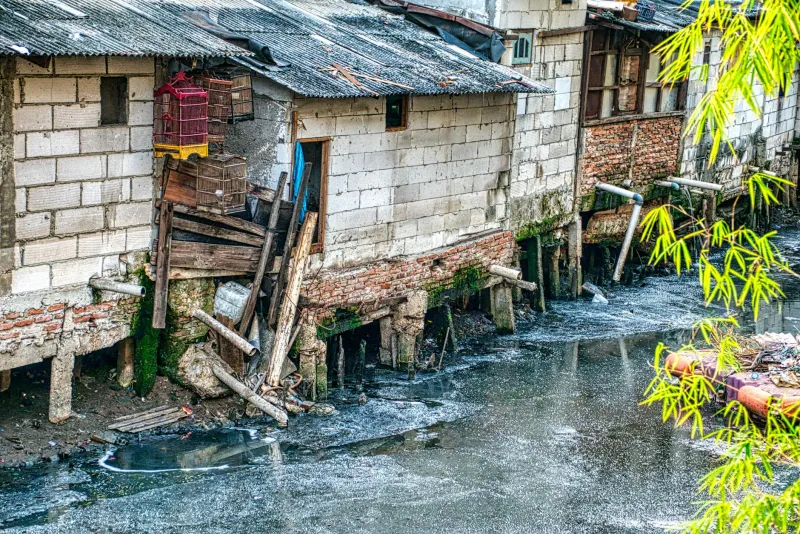
The environmental impact is even more stark. Raw sewage discharges have contaminated rivers across England, making waterways unsafe for swimming and destroying aquatic ecosystems. The River Wye, once pristine, is now choked with algae fed by agricultural runoff that water companies have failed to properly treat. These are not abstract environmental concerns – they represent the collapse of natural systems that communities depend on for recreation, tourism, and quality of life.
Young people, in particular, are inheriting a degraded water system. Wild swimming, once a birthright in British rivers, is now a health risk. The generation that will live longest with the consequences of water privatisation has had no say in the decision to prioritise shareholder returns over environmental stewardship.
The Case for Democratic Water
The solution is not better regulation or corporate social responsibility – it is democratic ownership. Water is a human right and a natural monopoly that belongs in public hands, accountable to the communities it serves rather than distant shareholders.
Public ownership would eliminate the fundamental conflict between profit maximisation and service delivery. Instead of paying dividends to shareholders, surpluses could be reinvested in infrastructure or used to keep bills affordable. Democratic accountability would replace regulatory capture, with water services answerable to elected representatives rather than financial markets.
The transition would not require taxpayer bailouts for shareholders. As Thames Water faces potential collapse under its debt burden, the government could allow the company to fail and bring its assets into public ownership at market value – essentially zero, given its negative equity position.
Beyond Ideology: A Practical Necessity
This is not ideological posturing – it is practical necessity. Climate change will place increasing pressure on water systems, requiring massive investment in flood defences, drought resilience, and upgraded treatment facilities. Private companies, focused on quarterly returns, cannot make the long-term investments required for climate adaptation.
The upcoming general election offers an opportunity to reverse one of Thatcher's most damaging legacies. Labour has committed to strengthening regulation but stopped short of promising renationalisation. This timidity in the face of obvious market failure shows how deeply neoliberal assumptions still shape political debate.
Water privatisation has been a thirty-year experiment in putting private profit before public good, and the results speak for themselves: higher bills, crumbling infrastructure, environmental destruction, and democratic deficit. The time has come to acknowledge this failure and bring water back where it belongs – under democratic control, serving people and planet rather than shareholders.