The Single-Night Deception
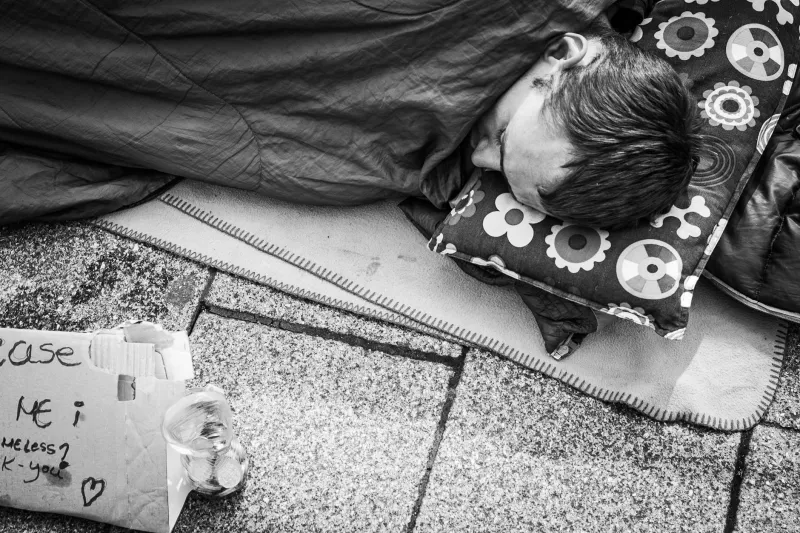
Every autumn, local authorities across England conduct their annual rough sleeping count — a single-night snapshot that has become the government's primary tool for measuring homelessness. On one designated evening, teams of volunteers and council workers walk predetermined routes, tallying the number of people they observe sleeping rough. This figure then becomes the official statistic that ministers cite in Parliament, that appears in government press releases, and that shapes funding decisions worth hundreds of millions of pounds.
But this methodology is fundamentally designed to minimise the numbers. A person sleeping in their car is invisible to the count. Someone sofa-surfing with friends doesn't register. Those in 24-hour McDonald's, hospital waiting rooms, or night buses simply don't exist in the official ledger. The result is a systematic undercount that allows successive governments to claim progress whilst the housing crisis deepens around them.
When Measurement Becomes the Target
The choice of methodology was not accidental. When New Labour introduced the rough sleeping count in 1998, it was explicitly designed as a 'manageable' metric that could show year-on-year improvement. Officials understood that a broader definition of homelessness — one that included the hidden homeless, those in temporary accommodation, or people at immediate risk of losing their homes — would produce numbers too large and politically inconvenient to address.
This statistical sleight of hand has profound consequences. Crisis, the homelessness charity, estimates that the single-night count captures less than half of all people experiencing rough sleeping in any given year. Their longitudinal research, tracking individuals over 12 months, found that whilst official counts recorded 4,266 people sleeping rough in London in 2022, over 11,000 people had actually slept rough in the capital at some point during that year.
The Hidden Thousands
The gap between official statistics and lived reality becomes stark when examining alternative data sources. NHS hospital admission records show a 28% increase in treatments for conditions directly associated with rough sleeping between 2019 and 2023. Local authority housing registers, which track people seeking emergency accommodation, recorded 147,000 households as homeless or threatened with homelessness in 2023 — a figure that dwarfs the official rough sleeping count of 3,898.
Shelter's research reveals that 'hidden homelessness' — people staying temporarily with friends, relatives, or strangers because they have nowhere else to go — affects an estimated 400,000 people annually. Young people are particularly affected: 62% of those experiencing hidden homelessness are under 25, often invisible to both official statistics and support services.
The Regional Lottery
The single-night methodology also creates perverse incentives for local authorities. Councils with higher counts receive more government funding, but they also face political pressure to reduce their numbers. The result is a postcode lottery where counting practices vary wildly between areas. Some authorities conduct thorough searches of known rough sleeping locations; others stick to well-lit city centres where numbers will be lower.
Weather plays a crucial role in distorting the figures. The count must take place between October and November, when temperatures have dropped but before the harshest winter months. A particularly cold snap can drive rough sleepers into temporary shelter, producing artificially low numbers that persist in government statistics for an entire year.
International Embarrassment
Britain's statistical approach stands in stark contrast to international best practice. Finland, which has virtually eliminated rough sleeping, uses a comprehensive housing-first approach backed by continuous monitoring of all forms of housing insecurity. The United States, despite its own housing challenges, conducts point-in-time counts alongside annual homeless assessments that track individuals throughout the year.
Even within the UK, Scotland has moved towards a more comprehensive approach, tracking all forms of homelessness including those staying temporarily with others. The result is higher official numbers but more effective policy responses — Scottish rough sleeping has fallen by 18% since 2019, whilst England's has risen by 12%.
The Human Cost of Statistical Games
Behind these numbers are real people whose suffering becomes invisible through methodological choices made in Whitehall offices. Take Sarah, a 34-year-old mother who lost her private rental when her landlord sold the property. She spent six months moving between friends' sofas, sometimes sleeping in her car with her eight-year-old daughter. She never appeared in any official count, despite being functionally homeless for half a year.
Or consider Marcus, a military veteran whose PTSD made it impossible to stay in hostels. He slept in a different location each night to avoid detection, precisely the behaviour that makes single-night counts so inadequate. His homelessness lasted 14 months; he was counted once.
Political Cover for Policy Failure
The single-night count provides perfect political cover for governments unwilling to address the structural causes of homelessness. Ministers can point to modest year-on-year reductions whilst ignoring the broader housing crisis that pushes people into precarity. They can announce targeted rough sleeping initiatives whilst cutting funding for prevention services that might stop people becoming homeless in the first place.
This statistical manipulation also allows governments to avoid confronting uncomfortable truths about their own policy choices. The bedroom tax, universal credit sanctions, and cuts to housing benefit all increase homelessness risk, but their impact disappears when measured through a methodology designed to minimise visible homelessness.
Towards Honest Measurement
Real progress requires honest measurement. Housing charities have called for a comprehensive homelessness census that would track all forms of housing insecurity over time. This would include rough sleeping, temporary accommodation, hidden homelessness, and those at immediate risk of losing their homes. Such an approach would produce larger, more politically challenging numbers — but it would also create the foundation for effective policy responses.
The technology exists to do this properly. Integrated data systems could link housing registers, benefit records, and health service usage to create a real-time picture of housing need. Some local authorities are already experimenting with these approaches, producing more accurate local data that better informs their responses.
The Reckoning
Britain's homelessness crisis is far worse than official statistics suggest, and that is entirely by design. The single-night count methodology was chosen precisely because it would produce manageable numbers that could show apparent progress whilst avoiding the political cost of addressing the true scale of housing insecurity.
Until we measure homelessness honestly, we cannot address it effectively — and thousands of invisible rough sleepers will continue to suffer whilst ministers claim success based on statistics designed to hide their failure.