
The Cruelty Is the Point
Every Tuesday at 9 AM, Sarah Jenkins prepares for battle. Not against her chronic pain condition that leaves her bedridden three days a week, but against a computer system designed to deny her existence. The 34-year-old former teacher from Coventry has been fighting for Personal Independence Payment (PIP) for eighteen months, navigating a labyrinthine assessment process that treats her disability as fraud until proven otherwise.
Sarah's experience is not an anomaly—it is the system working exactly as intended. The PIP assessment regime, outsourced to private contractors Capita and Atos, has transformed disability support into a hostile environment where legitimate claimants are routinely denied, appeals are systematically delayed, and administrative cruelty is repackaged as fiscal responsibility.
The Numbers Don't Lie
The statistics paint a damning picture of deliberate dysfunction. Department for Work and Pensions figures show that 65% of PIP appeals succeed at tribunal—a staggering indictment of initial decision-making. In some regions, overturn rates exceed 70%. If two-thirds of refusals are wrong, the system is not making mistakes—it is working to a different agenda entirely.
Between 2013 and 2023, the government spent £2.1 billion on PIP assessments while tribunals overturned 1.2 million decisions. The administrative cost of this deliberate inefficiency now exceeds £400 per assessment, meaning the state spends more money denying legitimate claims than it would save by processing them correctly first time.
Meanwhile, claimants wait an average of 18 weeks for initial decisions and 38 weeks for tribunal hearings. For people with degenerative conditions, this delay can be a death sentence by bureaucracy.
Outsourced Inhumanity
The privatisation of disability assessment has created perverse incentives where contractor profits depend on rejection rates. Capita and Atos operate under targets that reward assessors for finding people 'fit for work' regardless of medical evidence. Internal company documents, revealed through Freedom of Information requests, show performance bonuses linked to refusal quotas.
Dr. Mark Porter, former chair of the British Medical Association, described the system as "designed to fail claimants rather than assess need." GPs report that their detailed medical reports are routinely ignored in favour of 20-minute assessments by unqualified personnel who have never treated the claimant.
 Photo: Dr. Mark Porter, via www.thetimes.com
The human cost is measured in suicides, homelessness, and families driven into destitution. Disability Rights UK estimates that assessment stress contributes to over 600 deaths annually among claimants with mental health conditions.
The Meritocracy Myth
Conservatives defend this system as necessary to root out 'benefit fraud'—a convenient fiction that ignores the reality that disability benefit fraud rates consistently hover below 2%. The real fraud is intellectual: presenting deliberate administrative cruelty as sound financial management.
This rhetorical sleight of hand serves a deeper ideological purpose. By forcing disabled people to repeatedly prove their worth to an indifferent bureaucracy, the system reinforces the neoliberal myth that all social support must be earned through suffering. The message is clear: your pain is not real until the state validates it, and the state's default position is disbelief.
Who Bears the Cost?
The PIP lottery disproportionately punishes those least able to fight back. Citizens Advice data shows that successful appellants are overwhelmingly those with family support, digital literacy, and the physical capacity to navigate complex paperwork. The system's bias against mental health conditions means that anxiety, depression, and autism—Britain's fastest-growing disability categories—face rejection rates above 70%.
Women, ethnic minorities, and people from deprived areas are systematically disadvantaged by assessment criteria that prioritise physical over cognitive impairments. The postcode lottery extends beyond healthcare into social security, where your chance of receiving support depends more on your assessor's training than your medical need.
The Political Economy of Suffering
This is not accidental dysfunction but engineered exclusion. The PIP system exemplifies how austerity politics weaponises bureaucracy against the vulnerable while maintaining plausible deniability. Ministers can claim to support disabled people while designing systems guaranteed to fail them.
The broader implications extend beyond social security into the heart of British democracy. When the state systematically disbelieves its most vulnerable citizens, it erodes the social contract that legitimises public institutions. The message to disabled people is clear: you are not full citizens but supplicants whose needs are subject to arbitrary judgment.
Digital Barriers and Democratic Deficits
The shift to online-only applications has created additional barriers for disabled claimants who lack digital access or cognitive capacity to navigate complex web forms. The government's own accessibility audits show that 40% of PIP online services fail basic disability compliance standards—a cruel irony for a system supposedly designed to support disabled people.
The democratic deficit is profound. Parliament votes on disability benefit rates but never scrutinises the assessment process that determines who receives them. The real policy is made in contractor boardrooms, not the House of Commons.
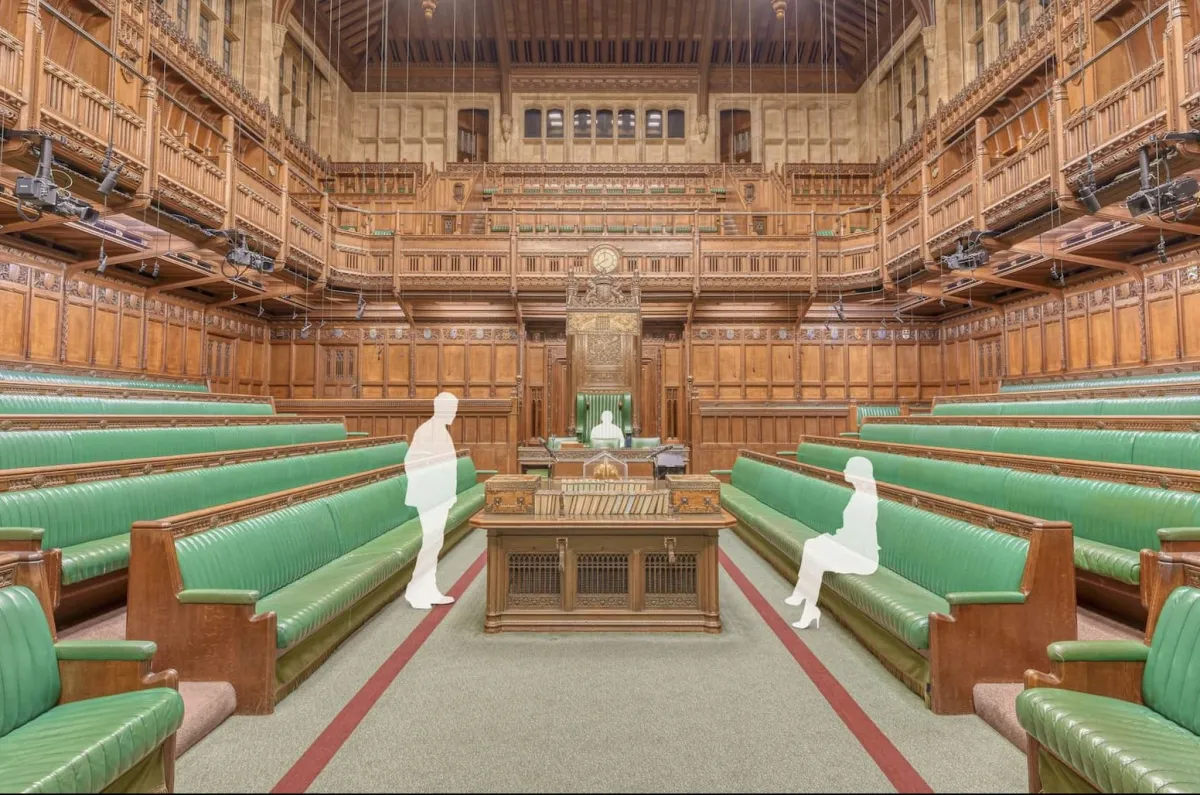 Photo: House of Commons, via circus360.uk
Reclaiming Dignity
The solution requires fundamental reform, not cosmetic adjustment. Disability assessment must return to public control with assessors employed directly by the NHS. Medical evidence from treating professionals must take precedence over tick-box exercises. Most importantly, the burden of proof must shift from claimant to state—the presumption should be support, not suspicion.
The PIP lottery represents everything wrong with Britain's approach to social security: privatised cruelty, algorithmic inhumanity, and the systematic degradation of citizenship into a means-tested privilege. Until we recognise disability support as a human right, not a charitable concession, the suffering will continue—and that suffering is not a bug in the system but its most essential feature.