The Great Offload
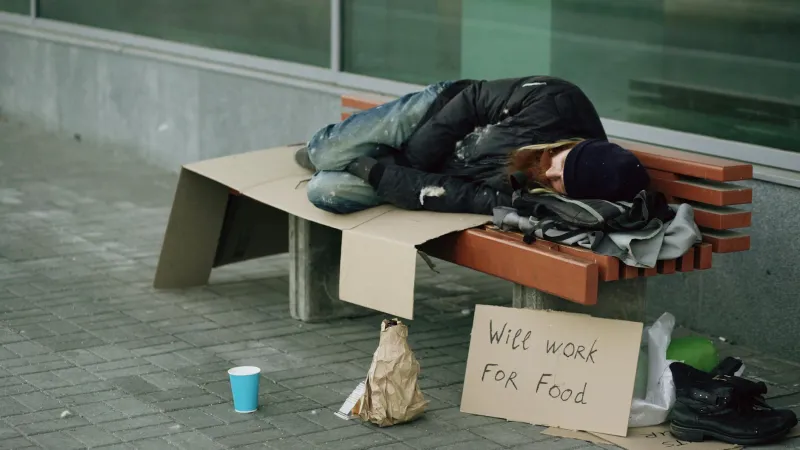
Across Britain, food banks are processing more parcels than ever, homelessness charities are housing rough sleepers in numbers that would have been unthinkable two decades ago, and mental health organisations are providing crisis interventions that were once the preserve of the NHS. This isn't the result of an increasingly generous society—it's the direct consequence of a deliberate political strategy that has transformed voluntary organisations from supplementary support services into essential infrastructure for basic human needs.
Since 2010, local authority spending has been slashed by 40% in real terms, whilst demand for charitable services has soared. The Trussell Trust distributed 1.3 million emergency food parcels in 2022-23, compared to just 61,000 in 2010-11. This isn't progress—it's the managed retreat of the state, with charities left to catch the falling bodies.
 Photo: The Trussell Trust, via static.wixstatic.com
The Impossible Burden
The mathematics of this arrangement are brutal. Charities are expected to deliver services with the reliability and coverage of public provision, but without the funding, statutory powers, or democratic accountability that comes with state responsibility. Crisis, the homelessness charity, now operates with an annual budget of £50 million—substantial by charity standards, but a fraction of what housing benefit cuts have removed from the system.
This creates an impossible tension. Voluntary organisations must simultaneously advocate for systemic change whilst providing emergency relief that keeps the current system from collapsing entirely. They become complicit in their own exploitation, forced to demonstrate their 'efficiency' by doing more with less, thereby proving to politicians that public services were always overfunded.
The human cost is measured not just in unmet need, but in the burnout of charity workers who entered the sector to supplement state provision, not replace it. Food bank volunteers report feeling overwhelmed by demand that never subsides, whilst mental health charities turn away clients they cannot accommodate—a rationing exercise that would be politically toxic if conducted by the NHS, but somehow acceptable when performed by volunteers.
The Rhetoric of Responsibility
Government ministers speak glowingly of 'Big Society', 'community resilience', and 'local solutions to local problems'. This language serves a dual purpose: it reframes state withdrawal as civic empowerment whilst placing moral responsibility for social problems onto individuals and communities rather than policy decisions.
When Rishi Sunak praised food bank volunteers as 'the best of Britain', he wasn't celebrating charity—he was normalising hunger. When local councils close libraries but praise community groups who run them from church halls, they're not supporting volunteerism—they're abandoning their statutory duties whilst claiming credit for the cleanup operation.
This rhetorical sleight of hand transforms policy failures into moral victories. Rising homelessness becomes evidence of charitable compassion. Food poverty demonstrates community spirit. Mental health crises showcase voluntary sector innovation. The worse things get, the more praise is lavished on those trying to hold the pieces together.
The Democratic Deficit
Charities providing essential services face a fundamental democratic problem: they can be defunded or redirected without any electoral consequences for the politicians who created the need they're addressing. When a council cuts homeless services, angry voters can target councillors. When a homelessness charity can't meet demand, the blame falls on charity trustees and volunteers.
This accountability gap is politically convenient but democratically corrosive. Essential services are removed from democratic oversight and placed into a parallel system where need is met not by right but by the goodwill of donors and the stamina of volunteers. Citizens become supplicants, dependent on the charitable impulses of others rather than the democratic decisions of their representatives.
The voluntary sector's own surveys reveal the strain. Three-quarters of charities report increased demand for their services, whilst two-thirds have seen their funding reduced. They're being asked to do more with less whilst being blamed for not doing enough.
The International Perspective
Britain's reliance on charitable provision for basic needs is not inevitable—it's a political choice. In Germany, food banks supplement rather than substitute for comprehensive welfare provision. In France, homelessness services remain primarily state-funded and state-delivered. Our European neighbours prove that robust public services and a thriving voluntary sector can coexist without the latter being conscripted to compensate for the former's managed decline.
The contrast is particularly stark in healthcare, where British mental health charities are providing crisis interventions that would be delivered by public health services in comparable nations. This isn't efficiency—it's cost-shifting that makes social problems invisible to official statistics whilst making them visible on every high street.
Breaking the Cycle
The solution requires recognising that charity cannot and should not replace the state's responsibility for citizen welfare. Voluntary organisations work best when they innovate, advocate, and supplement—not when they're conscripted as cut-price replacements for public services.
This means reversing the funding cuts that created the crisis, whilst establishing clear boundaries between state responsibility and voluntary enhancement. Food banks should address temporary emergencies, not permanent hunger. Homelessness charities should provide specialist support, not basic housing. Mental health organisations should offer peer support and advocacy, not crisis intervention.
The current model isn't just unsustainable—it's undemocratic, placing essential services beyond electoral accountability whilst allowing politicians to celebrate the consequences of their own failures. Britain's charities deserve better than being turned into unpaid social services, and Britain's citizens deserve better than having their fundamental needs dependent on voluntary goodwill rather than democratic decision-making.